Key takeaways
- What ad fatigue actually is: Fatigue shows up as a curve.
- Why teams used to let ads die: When a replacement creative took a week and a real budget to produce, the rational move was to squeeze every last efficient impression out of a winner before retiring it.
- The refresh cycle: Cheap creative inverts the logic.
Every ad that works eventually stops working. Not because it got worse, but because the audience saw it enough times that it stopped registering. Frequency climbs, the novelty wears off, the people most likely to respond already have, and the same creative that carried your account for three weeks quietly becomes the thing dragging it down. This is ad fatigue, and it is not a failure of the creative. It is a property of running anything to a finite audience.
What is changing is not whether ads fatigue (they always have) but what you can do about it and how fast. For most of performance marketing's history, the honest answer was: not much, not quickly. Now the answer is different, and the teams that adjust their habits to match are pulling ahead.
What ad fatigue actually is
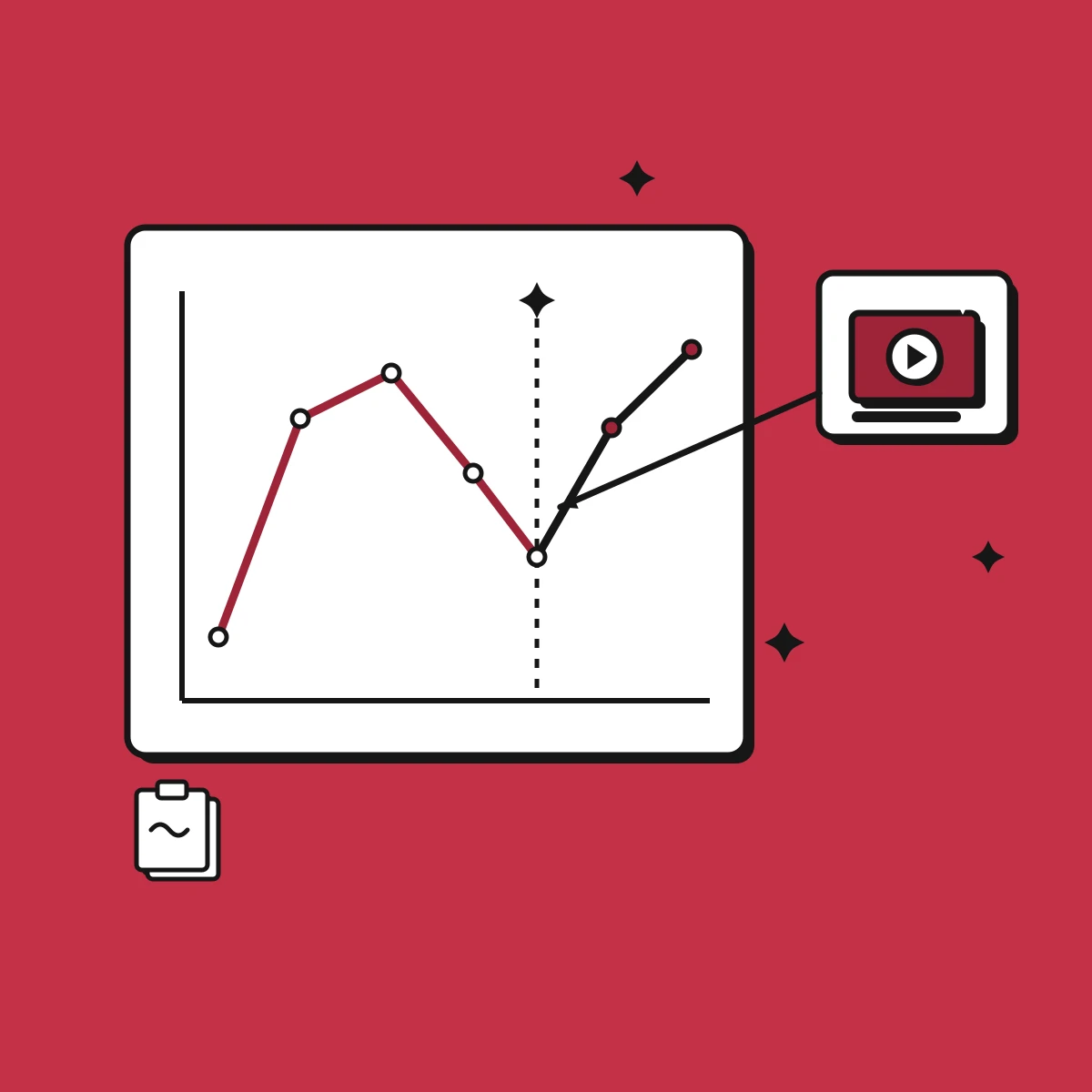
Fatigue shows up as a curve. A new creative ramps as the algorithm learns it, hits a peak, holds for a while, and then declines: click-through softens, cost per result creeps up, and the same spend buys less. Underneath that curve are a few mechanical causes: rising frequency on a saturating audience, the most responsive segment converting early and leaving a harder remainder, and simple wear-out, where a message that surprised on impression one is invisible by impression twelve.
The important thing is that the decline is predictable in shape even when it is not predictable in timing. You do not usually get a cliff. You get a slow erosion that is easy to miss day to day and obvious in a four-week chart. By the time the dashboard makes it undeniable, you have already spent into the decline.
Why teams used to let ads die
When a replacement creative took a week and a real budget to produce, the rational move was to squeeze every last efficient impression out of a winner before retiring it. So teams ran creative until the numbers were bad enough to force the issue, then scrambled to produce the next thing while performance sat in the trough. The result was a sawtooth: a winner decaying, a panicked gap, a new creative ramping, repeat.
That pattern was not laziness. It was a sensible response to production being slow and expensive. If making the next ad is the bottleneck, you naturally delay it as long as possible, which means you always refresh late, after the fatigue has already cost you.
The expensive part of fatigue was never the fatigue. It was that the fix took a week to produce, so you waited until you were sure you needed it, which is exactly when it is too late to help.
The refresh cycle
Cheap creative inverts the logic. If a fresh variant of your winner costs almost nothing to produce, there is no reason to wait for the decline to become painful. You refresh before the cliff, not after it. On a cadence, while the creative is still working, so performance never sits in the trough waiting for a replacement.
In practice the refresh cycle looks like this:
- Refresh the winner, don't just replace it. Most fatigue is exposure, not concept. A new edit, a different hook on the same proven angle, a recut opening: often that is enough to reset frequency without gambling on a new idea.
- Time it to the curve, not the crisis. Watch frequency and the early softening in cost per result, and queue the refresh when the curve flattens, not when it has clearly turned down.
- Keep a few concepts alive at once. Running several proven angles in rotation means no single one has to carry the account, and fatigue on one is cushioned by the others.
The point is that fatigue becomes a scheduling decision rather than an emergency. You are no longer waiting for a winner to fail; you are retiring it on your own timing while it is still ahead.
Refresh versus replace
Not every dip calls for the same move, and the cheap-variation era makes it tempting to refresh reflexively. The distinction worth holding: refreshing iterates a proven winner (same angle, new execution) and is the right call when an ad is fatiguing on exposure. Replacing means a genuinely new concept, and you need that when the angle itself is exhausted, not just the particular clip.
AI makes the first nearly free, which is the trap: it is easy to keep refreshing the same tiring idea long after the angle has stopped resonating, producing a stream of new edits that all decay faster than the last. The judgment that still matters is telling exposure fatigue (refresh) from concept fatigue (replace). Only the outcome metrics, read over time, can tell you which one you are looking at.
Building a refresh cadence
The teams that beat fatigue do not have fatigue-proof creative. They have a system. Concretely, that means watching the right signals (frequency and cost-per-result trend, not day-one engagement) and acting on them early. It means keeping a small bench of proven angles so a refresh is a queue, not a scramble. And it means resisting the pull to either run winners into the ground out of old habit or to churn endless edits just because you can.
When production was the bottleneck, fatigue was something that happened to you. When refresh is cheap, fatigue is something you manage, and managing it well, on a deliberate cadence, is the difference between a creative strategy that compounds and one that keeps starting over from the trough.
Sources
- Meta, "Ad fatigue, frequency, and creative refresh," Meta for Business insights, 2025.
- Nielsen, "Advertising wear-out and the decay of creative effectiveness," 2024.
- WARC, "Creative rotation and sustained campaign performance," 2024.
Frequently asked questions
- What should marketing teams know about What ad fatigue actually is?
- Fatigue shows up as a curve.
- What should marketing teams know about Why teams used to let ads die?
- When a replacement creative took a week and a real budget to produce, the rational move was to squeeze every last efficient impression out of a winner before retiring it.
- What should marketing teams know about The refresh cycle?
- Cheap creative inverts the logic.